
Presented by The Powerwashing Kings – Connecticut’s Exterior Cleaning Experts
When most homeowners in Connecticut think about home maintenance, gutters usually aren’t the first thing that comes to mind—until water starts spilling over the sides or pooling near the foundation. At The Powerwashing Kings, we believe gutter cleaning isn’t just a chore—it’s one of the most important ways to protect your home from costly water damage.
Think of your gutter system as your home’s silent defense team. When it’s working, rainwater flows safely from your roof, through the gutters, into the downspouts, and away from your foundation. But when it’s clogged with leaves, pine needles, and debris, that system breaks down—and problems begin.
Why Gutter Cleaning Matters More Than You Think
In Connecticut, seasonal changes make gutter maintenance especially important. Fall leaves, winter ice, spring pollen, and summer storms all contribute to the buildup. If left unchecked, that debris turns into blockages that can cause serious damage.
Clogged gutters don’t just overflow—they redirect water into places it doesn’t belong. That can lead to foundation cracks, basement leaks, siding damage, roof rot, and even mold growth inside your home. Studies show that blocked gutters and downspouts are one of the leading causes of preventable exterior home damage.
Downspouts are especially critical. If they are clogged, water backs up into the entire system, causing overflow and pooling around your foundation, which increases the risk of long-term structural issues.
Step 1: The Debris Problem – What’s Really in Your Gutters?
Every gutter cleaning job starts with what you can see: debris buildup.
Common culprits in Connecticut include:
Fallen leaves from oak, maple, and birch trees
Pine needles that slip through openings and clog bends
Roof granules from aging shingles
Twigs, dirt, and organic buildup
Occasional nests from birds or insects
Over time, this debris traps moisture and becomes heavy. That weight can pull gutters away from the roofline, creating even more expensive repairs.
Routine removal of this buildup is the foundation of any effective gutter maintenance plan.
Step 2: Clearing the Gutter Channel the Right Way
Once debris is identified, the next step is full removal. Professional systems (like the ones we use at The Powerwashing Kings) focus on:
Hand removal of large debris for precision
Specialized scoops for packed material
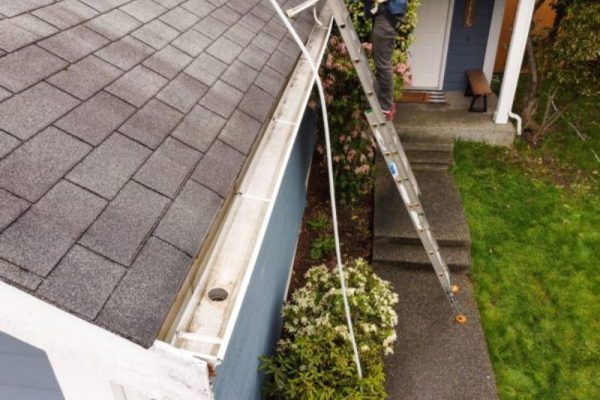
Safe ladder positioning to protect your roofline
Section-by-section cleaning to ensure nothing is missed
This is where many DIY attempts fall short—homeowners often clear visible leaves but miss compacted sludge underneath. That hidden layer is what causes slow drainage and eventual clogs.
Safety is also critical. Proper ladder placement and protective gear are essential to avoid injury or gutter damage during cleaning.
Step 3: The Downspout Test – Where Problems Hide
A clean gutter is only half the job. The real test is whether water can flow freely through the downspouts.
Downspouts are the “exit route” for your entire system. When clogged, they cause water to back up, overflow, or spill directly next to your home. This can lead to soil erosion and foundation damage over time.
A proper downspout check includes:
Flushing with high-pressure water
Testing for smooth, uninterrupted flow
Clearing hidden blockages near elbows and joints
Ensuring discharge is directed away from the home
This step is often skipped in basic cleanings, but it’s essential for full system performance.
Step 4: Flushing the System for Full Restoration
After debris removal, the entire system should be flushed with water. This removes:
Fine dirt and sediment
Shingle granules
Remaining organic material
Flushing also reveals hidden leaks or weak points in seams and joints. If water doesn’t flow smoothly, there’s still a blockage somewhere that needs attention.
A properly functioning system should move water quickly from the roof to the ground without pooling or hesitation.
Step 5: Protecting Your Home for the Long Term
Gutter cleaning isn’t just about reacting to problems—it’s about preventing them.
In Connecticut, most experts recommend cleaning gutters at least twice a year, typically in late fall and early spring. Homes surrounded by trees may require even more frequent service.
To reduce long-term maintenance, homeowners can also consider:
Gutter guards to block debris entry
Regular roofline inspections
Trimming overhanging branches
Seasonal professional maintenance
These steps help extend the life of your gutter system and protect your home year-round.
The Powerwashing Kings Difference
At The Powerwashing Kings, we don’t treat gutter cleaning as a quick add-on—we treat it as a complete protection service for your home.
Our approach focuses on:
Full debris removal (not just surface cleaning)
Complete downspout flushing
Flow testing for every section
Safety-first service for your home and property
Preventative recommendations tailored to Connecticut weather
We believe homeowners shouldn’t have to worry about ladders, clogs, or water damage. Our job is to handle it all—cleanly, safely, and thoroughly.
Final Thoughts
Your gutter system works hard every time it rains, but only if it’s clear, flowing, and properly maintained. From debris-filled channels to blocked downspouts, small issues can quickly turn into major repairs if ignored.
With regular maintenance and professional care from The Powerwashing Kings, your home stays protected from the roofline down to the foundation.
Because in Connecticut’s weather, clean gutters aren’t optional—they’re essential.